Trasparenza
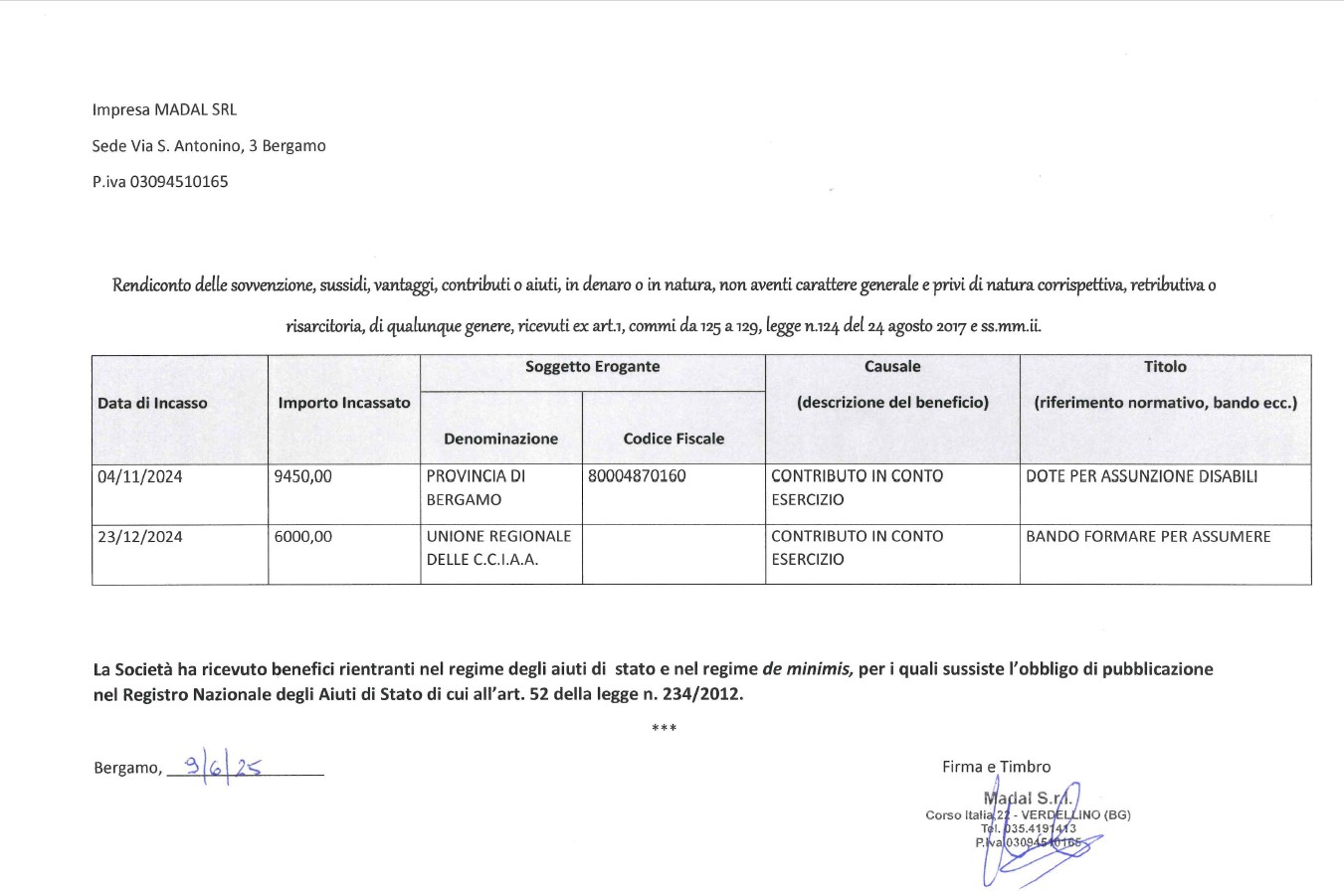
In questa sezione vengono pubblicati bandi di gara a cui l’azienda ha partecipato e per i quali ha ottenuto agevolazioni, rendicontazioni di sussidi o altri documenti in accordo col principio di trasparenza il cui obiettivo è quello di favorire un controllo diffuso da parte del cittadino sull’utilizzo delle risorse pubbliche.
Certificazioni
POLITICA PER LA QUALITÀ
E L’AMBIENTE
La ISO 9001 è una norma che certica che l’azienda ha un sistema di gestione della qualità volto alla massima soddisfazione dei clienti, ottimizzazione dei propri processi produttivi, prontezza nel gestire i mutamenti del mercato ed organizzare la propria azienda per rispondere al meglio alle aspettative e ai requisiti dei propri clienti.
La ISO 14001 è una norma che certifica che l’azienda possiede un sistema di gestione adeguato a tenere sotto controllo gli impatti ambientali delle proprie attività, (emissioni, scarichi idrici, sostanze pericolose, rischi di incidenti, scarti di produzione, consumo di energia, ecc) e a ricercare sistematicamente il miglioramento in modo coerente, efficace e sostenibile.
Ecolabel UE è il marchio di qualità ecologica dell’Unione Europea (Ecolabel UE) che contraddistingue prodotti e servizi che pur garantendo elevati standard prestazionali sono caratterizzati da un ridotto impatto ambientale durante l’intero ciclo di vita.
CAM è l’acronimo di Criteri Ambientali Minimi, che sono un insieme di requisiti, dichiarati nel Decreto Ministeriale del 24 maggio 2012 (con aggiornamento normativo di maggio 2017) che determinano la diminuzione dell’impatto ambientale attraverso l’utilizzo di prodotti chimici con un ciclo di vita rispettoso dell’ambiente.
Il marchio “Plastica Seconda Vita” è un sistema di certificazione ambientale di prodotto dedicata ai materiali ed ai manufatti ottenuti dalla valorizzazione dei rifiuti plastici; Detto marchio nasce dall’esigenza di rendere maggiormente visibili e più facilmente identicabili i beni in materie plastiche da riciclo che vengono destinati al pubblico.
HACCP è l’acronimo di Hazard Analysis and Critical Control Point): si tratta di una serie di misure cautelative che mirano ad assicurare ai clienti gli standard minimi di sicurezza. É un di “autocontrollo” in cui bisogna eliminare alla base gli eventuali rischi collegati agli alimenti e, di conseguenza, garantire eccellenti condizioni di pulizia e sanificazione.